
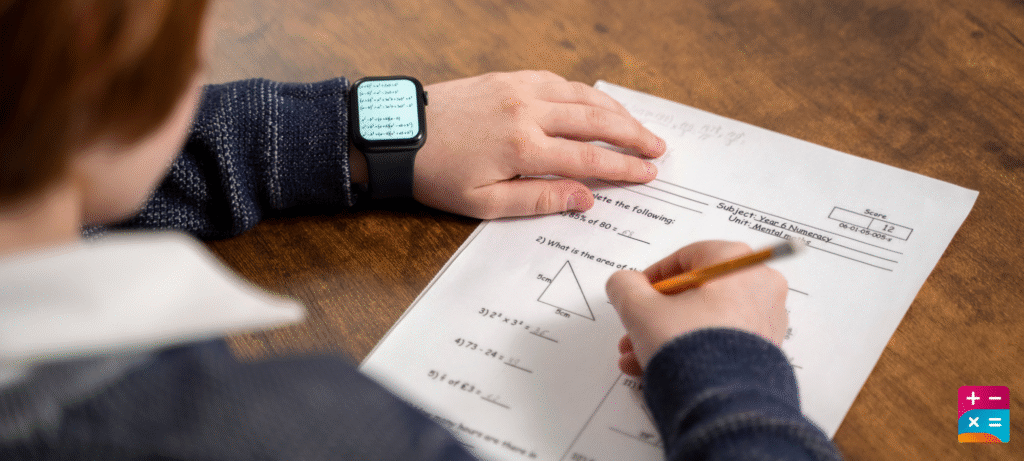
Trying to estimate SAT score after taking a practice test can feel more confusing than the test itself. You finish the questions, check how many you got right, and then you’re stuck thinking, “Is this a 1200 or a 1400?” For the Digital SAT, this confusion is even bigger because scoring no longer works in a simple straight line.
Many students still use old paper SAT methods to estimate scores, and that’s where things go wrong. The Digital SAT uses adaptive testing, difficulty-based scoring, and scaling, so your raw correct answers don’t directly translate into a final score.
In this guide, we’ll walk through how to estimate SAT score from practice tests the right way, without stress, without complicated math, and without guessing blindly.
Why Estimating SAT Score Is Harder in Digital SAT
The Digital SAT is adaptive, meaning the test adjusts itself based on your performance. Two students can get a similar number of questions correct but end up with different scores because question difficulty matters a lot more than it used to. Harder questions carry more weight, especially in the second module of each section.
This is why simply counting correct answers no longer works.
What Practice Test Results Actually Show
Practice tests are still very useful, but only if you read the results correctly. When you try to estimate SAT score from a practice test, you’re not just looking at how many questions you missed.
Key Patterns to Observe
- Which module you likely reached (easy or hard)
- The difficulty of questions you missed
- Whether mistakes were careless or conceptual
- Section-wise performance (Math vs Reading & Writing)
Practice tests show patterns, not just numbers. Understanding those patterns makes score estimation more accurate.
Understanding Raw Score vs Scaled Score
A common mistake students make when estimating SAT score is confusing raw score with scaled score.
Raw Score
Raw score is simply how many questions you answered correctly. There is no negative marking in the Digital SAT, so wrong answers don’t reduce your raw score.
Scaled Score
Scaled score is your final SAT score, ranging from 400 to 1600. This score is calculated using difficulty weighting and adaptive performance, not just raw correct answers.
Understanding this system makes score estimation much easier.
How to Estimate SAT Score Step by Step
Step 1: Take an Official-Style Practice Test
Use an official digital practice test. Unofficial or outdated paper tests won’t give accurate results.
Step 2: Calculate Raw Scores
Count how many questions you got right in Reading & Writing and Math.
Step 3: Consider Difficulty Level
Did Module 2 feel harder or easier? A harder second module usually indicates strong performance in Module 1, increasing scoring potential.
Step 4: Estimate Section Scores
A strong performance with harder modules can put Reading & Writing or Math in the 650–750 range, even with a few mistakes.
Step 5: Combine Sections
Add both section estimates to get a total SAT score out of 1600. This method gives a realistic range, not an exact number.
Why Guessing Your Score Can Be Misleading
Many students panic after practice tests because they estimate SAT score too harshly. Missing a few questions doesn’t automatically mean a low score.
In the Digital SAT, missing high-difficulty questions hurts less than missing many easy ones. Hard tests often indicate higher scoring potential, so guessing based on feelings or assumptions can be misleading.
Using SAT Score Calculators for Better Accuracy
Score calculators help simplify estimation. They allow you to input:
- Estimated correct answers
- Section-wise performance
- Assumed difficulty level
Based on this, they provide a score range that matches the Digital SAT model more closely. This approach is much better than converting raw scores manually.
How satscorecalculator.co.uk Helps You Estimate SAT Score
The SAT Score Calculator is built specifically for the Digital SAT. Input your practice test performance, and the tool calculates an estimated score.
It’s especially useful for tracking progress over multiple practice tests without stressing over single test results.
Common Mistakes to Avoid When Estimating SAT Score
- Using old SAT conversion tables, which are unreliable
- Assuming all questions are equal in scoring
- Ignoring section balance (Math can offset Reading & Writing and vice versa)
- Estimating scores based on feelings instead of data
Analysis should always be logical and pattern-based.
How Often Should You Estimate Your SAT Score
Don’t estimate your score after every small quiz. Focus on full-length practice tests to get meaningful data and track improvement trends. Tracking score ranges instead of exact numbers is more accurate and less stressful.
How Score Estimation Helps Your Preparation Strategy
Accurate score estimation guides preparation. It identifies weaker sections, adjusts study plans, and keeps you motivated by tracking gradual improvement. Understanding scoring prevents burnout from unrealistic expectations.
Official Practice Tests and Reliability
Use practice tests aligned with College Board guidelines for best results. Third-party tests can help but may not reflect accurate scoring. Combining official tests with a reliable score calculator provides the most accurate estimation.
Final Thoughts on How to Estimate SAT Score
Estimating SAT score from practice tests is an essential skill for Digital SAT students. Focus on performance quality, difficulty level, and section balance rather than raw correct answers. Use reliable tools and avoid guesswork.
Combining knowledge of the scoring system with practice test analysis makes estimation stress-free and helps you focus on improvement, which ultimately raises your SAT score.